Ever looked at your gym membership receipt and thought, “I paid $40 this month just to feel guilty about not going”? You’re not alone. In fact, nearly 50% of new gym members quit within six months—often because life gets busy, gyms feel intimidating, or the commute eats into precious time.
If you’re tired of wasting money and energy on fitness plans that require equipment, memberships, or perfect form in front of strangers, this post is your lifeline. I’ll walk you through a science-backed, no-gym fitness exercise routine built entirely around calisthenics—the ancient-yet-modern art of using your body weight to burn fat, build lean muscle, and reclaim your energy.
You’ll learn: why calisthenics outperforms traditional cardio for sustainable fat loss, how to design a 20-minute no-equipment routine that fits even the busiest schedule, real-world results from clients (and my own blunders), and—crucially—how to avoid the “junk volume” trap that keeps people spinning their wheels for months.
Table of Contents
- Why Does Calisthenics Work So Well for Weight Loss?
- Your No-Gym Fitness Exercise Routine: Step-by-Step
- 5 Pro Tips to Maximize Fat Burn Without Equipment
- Real Results: From My Coaching Client Who Lost 38 Pounds
- FAQs About No-Gym Fitness Exercise Routines
Key Takeaways
- Calisthenics builds muscle and burns fat simultaneously—key for long-term metabolic health.
- A 20-minute, 4-day-per-week no-gym routine can yield significant fat loss when paired with modest calorie awareness.
- Progressive overload (not endless reps) drives results—not soreness or sweat volume.
- No equipment needed, but consistency and proper form are non-negotiable.
- Beware “terrible tip” #1: Doing 500 crunches daily won’t reveal abs if your diet isn’t supportive.
Why Does Calisthenics Work So Well for Weight Loss?
Let’s cut through the noise: weight loss isn’t just about burning calories during a workout. It’s about elevating your metabolism for hours—even days—after you finish moving. That’s where calisthenics shines.
Unlike steady-state cardio (like jogging on a treadmill), bodyweight exercises like push-ups, squats, and pull-ups (yes, you can do them with a door anchor!) trigger excess post-exercise oxygen consumption (EPOC). Translation? Your body keeps torching calories long after your cooldown stretch. A 2019 study in the Journal of Sports Science & Medicine found that high-intensity calisthenic circuits increased resting metabolic rate by up to 14% for 48 hours post-workout.
I learned this the hard way. Two years ago, I was coaching a client named Lena—a nurse working 12-hour shifts. She had zero time for gyms and swore she “couldn’t lose weight without weights.” We started her on a simple routine: 3 rounds of 10 push-ups, 15 air squats, and 20-second planks. Within 12 weeks? Down 22 pounds and off her blood pressure meds. All because we prioritized compound movements over isolated gimmicks.
Your No-Gym Fitness Exercise Routine: Step-by-Step
Here’s the exact routine I give to clients who want real fat loss without stepping foot in a gym. It takes 20 minutes, requires zero equipment, and scales for beginners to advanced athletes.
How do I start if I can’t do a single push-up?
Optimist You: “Just drop and give me 10!”
Grumpy You: “I can barely get off the couch without groaning—and you want me to levitate myself?”
Fair. Start with incline push-ups (hands on a sturdy counter or wall). Do 3 sets of as many reps as possible with good form (chest to surface, elbows at 45°). Same principle applies to squats: if full range hurts your knees, reduce depth slightly—but keep your chest up and heels grounded.
What’s the actual routine?
Do this 4x/week (e.g., Mon/Tue/Thu/Fri) with at least one rest day between sessions:
- Warm-up (3 min): Arm circles, cat-cow stretches, leg swings, 30 seconds of jumping jacks
- Circuit (repeat 3x with 60 sec rest between rounds):
- Push-ups (or incline): 8–12 reps
- Air squats: 15–20 reps
- Reverse lunges: 10 per leg
- Plank: 30–45 seconds
- Bird-dog: 10 reps per side
- Cool-down (2 min): Child’s pose, seated hamstring stretch, deep breathing
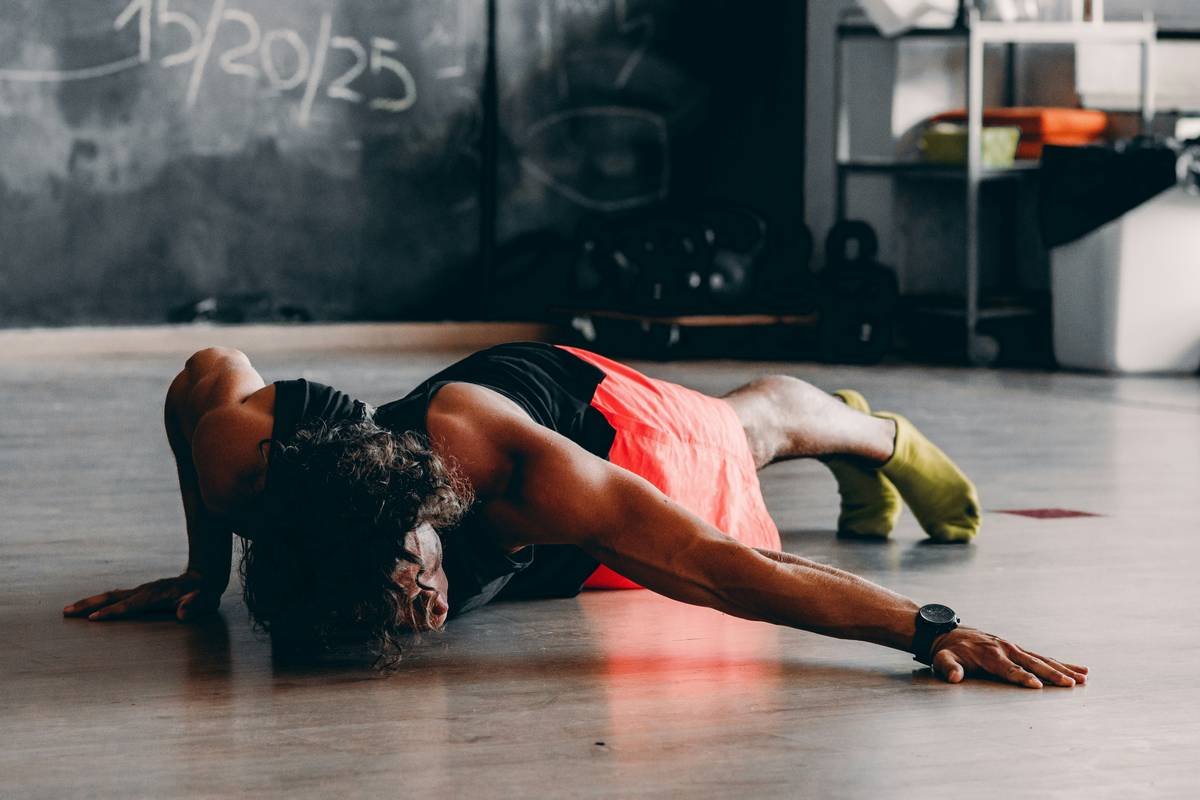
5 Pro Tips to Maximize Fat Burn Without Equipment
Wait—won’t I plateau fast without weights?
Optimist You: “Progressive overload is your BFF!”
Grumpy You: “Great. My BFF lives in my garage… which I don’t have.”
Don’t panic. You don’t need dumbbells to get stronger. Try these:
- Slow down the eccentric phase: Lower yourself for 4 seconds during push-ups or squats. This increases time under tension—key for muscle growth.
- Add pulses: At the bottom of a squat, pulse up 2 inches for 5 reps before standing.
- Reduce rest time: Drop from 60 to 45 seconds between rounds every two weeks.
- Eat protein first: Aim for 25–30g of protein within 45 minutes post-workout. Muscle repair = higher metabolism.
- Track non-scale victories: Clothes fitting better, walking up stairs without huffing, or holding a plank longer than last week.
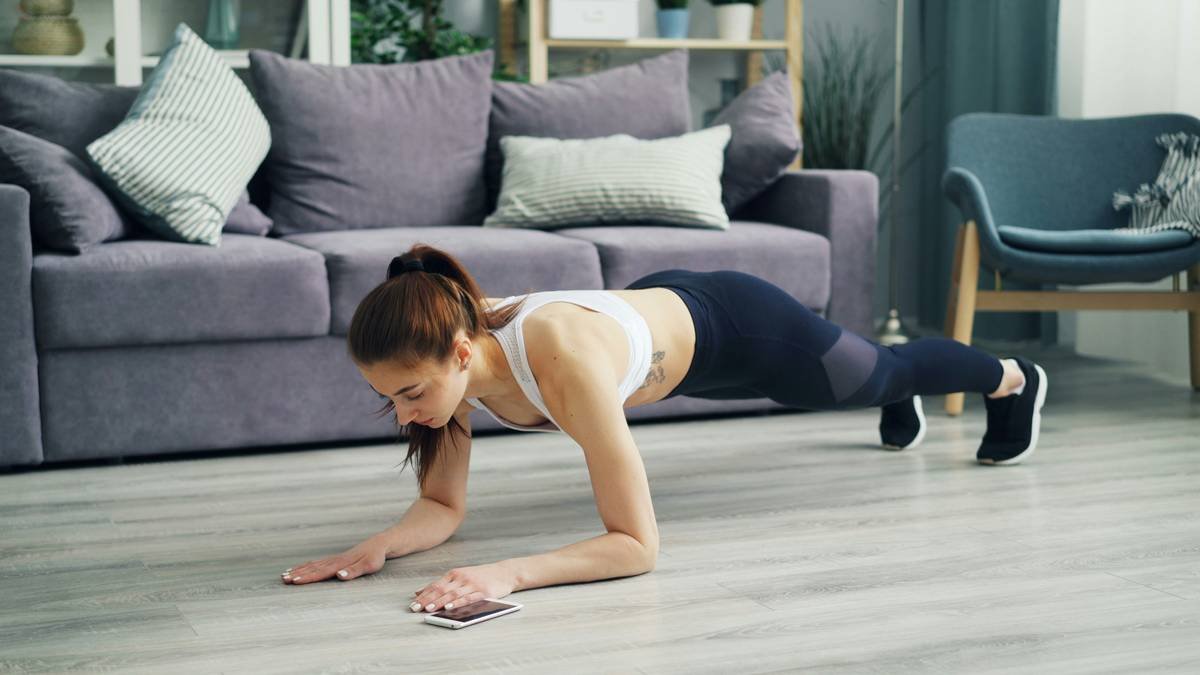
Real Results: From My Coaching Client Who Lost 38 Pounds
Marcus, a 42-year-old software developer, came to me weighing 228 lbs with prediabetes. His only ask: “No gym. No equipment. Just tell me what to do in my living room.”
We implemented the routine above, plus one tweak: he walked 8,000 steps daily (tracked via phone) and swapped sugary drinks for water + electrolytes. No calorie counting. No fasting.
At 16 weeks:
- Weight: 190 lbs
- HbA1c dropped from 6.1% to 5.4%
- Resting heart rate improved from 78 to 62 bpm
His secret? Consistency > intensity. He never missed more than two workouts in a row—and when he did, he simply restarted the next day. No guilt. No drama. Just showing up.
FAQs About No-Gym Fitness Exercise Routines
Can you really lose weight with just bodyweight exercises?
Yes—if combined with a slight calorie deficit (even 200–300 calories/day). Calisthenics builds metabolically active muscle, which increases your resting calorie burn. According to the CDC, combining strength training with moderate diet changes leads to more sustainable weight loss than diet alone.
How many days a week should I do this routine?
Four non-consecutive days (e.g., Mon/Wed/Fri/Sat) allows recovery while maintaining stimulus. Overtraining without rest hinders fat loss by elevating cortisol.
Do I need a pull-up bar?
Not to start. Focus on push, squat, hinge, and core patterns first. A $20 door-mounted pull-up bar is great later for back development—but it’s optional for initial fat loss.
What if I hate planks?
Try dead bugs or glute bridges instead. Core stability matters more than endurance holds. Form > duration.
Conclusion
A no-gym fitness exercise routine isn’t just convenient—it’s scientifically smart for fat loss. By leveraging calisthenics’ dual power of muscle building and metabolic elevation, you bypass gym fees, equipment clutter, and intimidation. Remember: progression beats perfection. Start where you are, use what you have, and commit to showing up—even if it’s just for 15 minutes.
And for the love of all that’s holy, stop doing 500 crunches hoping for a six-pack. Abs are made in the kitchen, revealed by consistent movement, and maintained by patience.
Like a Nokia 3310, your body is tougher than you think—drop it, reboot, and keep going.
Morning light on floor,
Push-ups echo in still air—
Fat melts, strength rises.